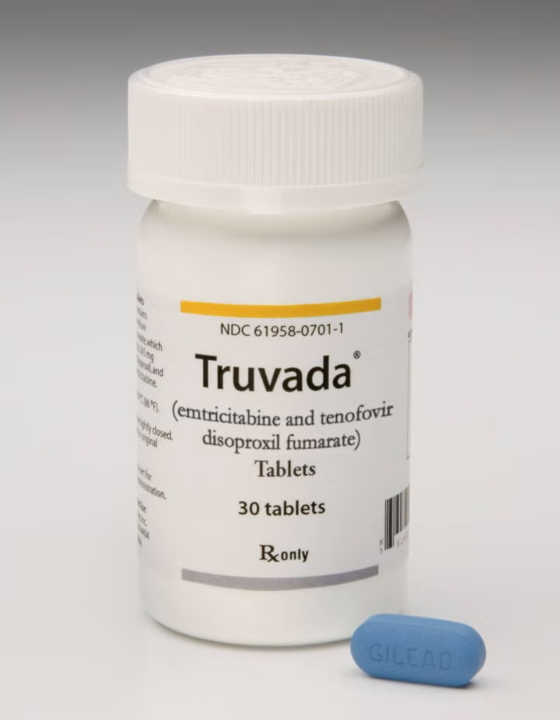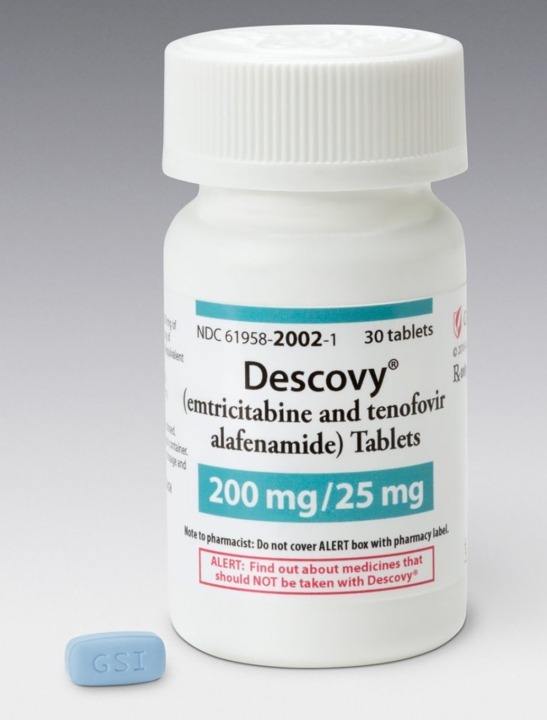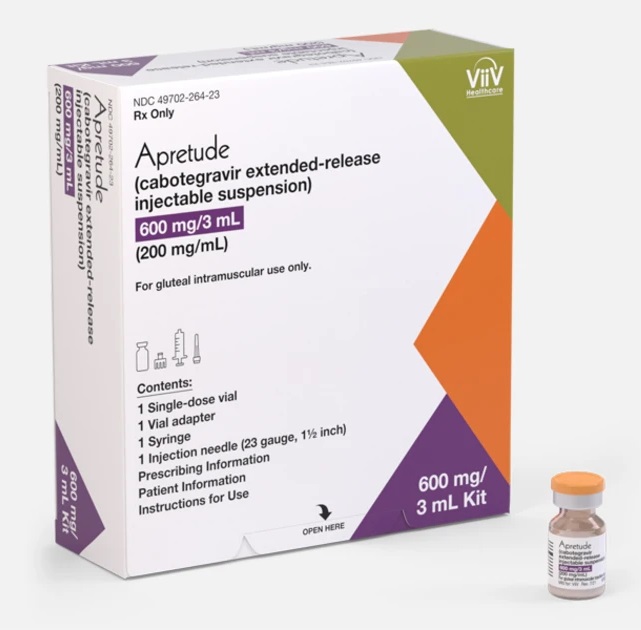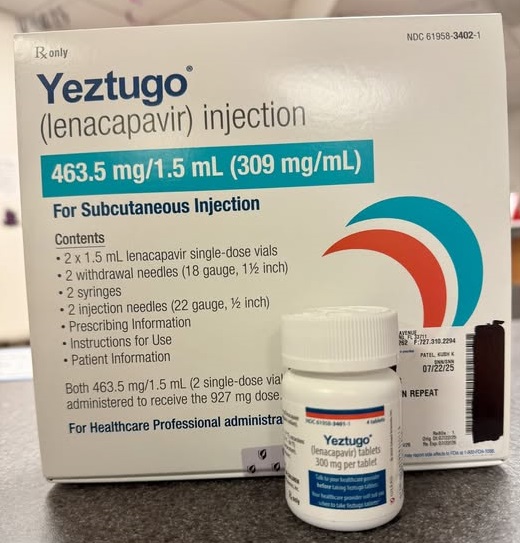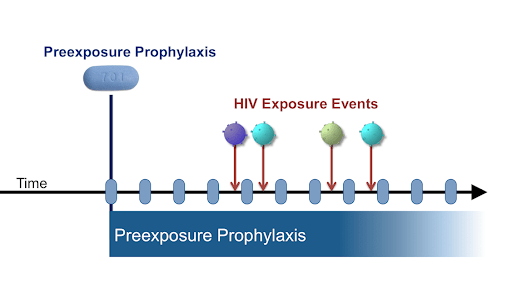
PrEP stands for Pre-Exposure Prophylaxis. It comprises of 2 antiretroviral medications tenofovir and emtricitabine (TDF and FTC) and is highly effective in reducing the chances of contracting HIV infection. The use of PrEP is now recommended in national guidelines in many countries.
The World Health Organization recommended in 2015 that PrEP should be offered as an additional prevention choice for people at substantial risk of HIV infection as part of combination HIV prevention approaches, and in 2017 published an implementation tool to guide countries on the introduction and implementation of PrEP. HIV transmission among men who have sex with men (MSM) has been rising in Singapore as it has in most other countries, indicating the need for additional methods at HIV prevention such as PrEP.
As of 2021, PrEP has expanded to a long-acting option where injections are used instead of oral pills, giving more options on protection.
Oral-based PrEP
Men who have Sex with Men (MSM)
The iPrEx study was a double-blind, placebo-controlled, multi-centre trial. The TDF/FTC group was associated with a 44% reduction in the risk of HIV acquisition (95% CI, 15-63). When blood samples were tested for the medication, there was a 92% reduction in the risk of HIV acquisition in persons with detectable levels of TDF/FTC versus those without.
The IPERGAY study was a double-blind, multi-centre trial. The on-demand regimen involved taking 2 tablets of TDF/FTC 2 to 24 hours before sex, 1 tablet a day during periods of sexual risk and for 48 hours (two doses) after sex. The study was stopped early when it showed that 14 people became infected with HIV in the placebo group compared with 2 in the TDF/FTC group, a risk reduction of 86%.
The PROUD study was a randomised, open-label trial in England. A total of 23 participants became infected with HIV over the course of the study; three in the daily TDF/FTC group and 20 in the deferred group. This represents a risk reduction of 86%.
Heterosexuals
The Partners PrEP trial was a double-blind trial of daily TDF/FTC or TDF in Uganda and Kenya conducted from 2008 to 2010. Compared to placebo, the overall efficacy estimates was 75% for TDF/FTC, and 67% for TDF alone. When blood TDF levels were measured, for participants in the TDF/FTC group, detectable drug was associated with a 90% reduction in the risk of HIV acquisition.
Injecting Drug Users
The Bangkok Tenofovir Study was a double-blind, placebo-controlled trial. The efficacy of TDF was 48.9%, however detectable levels of TDF in the blood was associated with 73.5% reduction in the risk for HIV acquisition.
The effectiveness of PrEP for HIV prevention is therefore directly related to taking the medication.
Injectable-based PrEP
LEN
The PURPOSE 2 trial primarily enrolled males (aged 16–80 years in 92 trial sites in Argentina, Brazil, Mexico, Peru, South Africa, Thailand, and the United States. After screening the eligible trial population for HIV infection to establish background incidence, participants who tested negative were randomized to receive injectable LEN every 6 months or daily oral TDF/FTC. The trial’s primary efficacy analysis compared HIV infection incidence in the LEN group with background HIV incidence in the screened population. The secondary efficacy analysis compared HIV infection incidence in the LEN group with the TDF/FTC group.
For more information, visit here, or here.
CAB-LA
The The HIV Prevention Trials Network (HPTN) assessed the efficacy of CAB-LA against daily PrEP (TDF/FTC) together with its safety and dosing across multiple studies. All studies
were multisite RCTs. Across these trials, approximately 8120 individuals were enrolled, with
4114 individuals randomized to receive active CAB-LA. Meta-analysis shows 79% reduction in HIV risk compared to oral PrEP.
The clinical trials also provided safety information on PrEP. Some people in the trials had early side-effects such as an upset stomach loss of appetite but these were mild and usually went away within the first month. Some people also had a mild headache. No serious side-effects were observed. You should tell your doctor if these or other symptoms become severe or do not go away.
However, oral PrEP does interact with some medicines.
Tenofovir (TD) should also be used with caution if you regularly take other drugs that affect the kidneys. These include some non-steroidal anti-inflammatory drugs (NSAIDs), especially diclofenac, ibuprofen and naproxen. Routinely taking these drugs with PrEP can cause kidney problems. Avoid these meds when taking PrEP and please let your doctor know if you regularly need to take them.
TAF can interact with TB meds, anti-epileptics, St John’s Wort and others. These interactions are not a problem with TD. PrEP is very safe for trans and non-binary people taking hormone therapy.
Interactions with injectable PrEP are more complicated, refer to this online drug interaction checker: https://www.hiv-druginteractions.org/checker
Anyone can now take PrEP!
Daily PrEP (Oral)
Daily dosing of co-formulated TDF/FTC (e.g. Truvada).
To start
Either take 1 dose daily for 7 consecutive days before sexual activity OR 2 doses at least 2 hours before sexual activity.
To maintain
Take 1 dose daily around the same time. If the dose is at 12pm today, take the next one at 12pm tomorrow, and so on.
If a pill is missed, there is still good protection as long as 4 out of 7 doses were taken that week.
To stop
For cisgender MSM: Take for 2 more days after last sex.
Everyone else: Take for 7 days after last sex.
To resume
If you have stopped PrEP for a week or longer, please restart using 2 doses first and take 1 dose the day afterwards for 7 days that week.
On-Demand PrEP (Oral)
Anyone can now take on-demand PrEP, unless they have:
1) Hepatitis B infection
2) Difficulties following dosing schedule (e.g. frequent sex when drunk/high)
3) Difficulties predicting when you will have sex
A double dose (two tablets) of co-formulated TDF/FTC (e.g. Truvada) OR TAF/FTC (e.g. Descovy) to be taken 2-24 hours before potential sexual exposure, to be followed by single doses 24 and 48 hours after the initial dose
To start
Take 2 doses at least 2 hours before sexual activity.
To maintain
Take 1 dose 24 hours after that sexual activity and 1 more dose 48 hours later.
To stop
If that sexual activity happened at 11pm on Friday, take 1 dose at 11pm on Saturday then 1 dose at the same time on Sunday to complete on-demand dosing.
If another sexual activity occurs either on Saturday or Sunday, keep taking a pill each day and continue for 2 days after the last sexual activity.
To resume
Take 2 doses to start on-demand dosing again.
Long-Acting PrEP (Injectable)
An initiation combination of oral pills and injection of Lenacapavir (LEN) is taken over 2 consecutive days. Protection begins within 1 day afterwards and it will last for 6 months.
OR
A single injection of Long Acting Cabotegravir (CAB-LA) is taken. Protection begins about a week afterwards and it will last for 2 months.
Lenacapavir (LEN)
To start
2 doses of LEN is administered via injection, then 4 oral pills are given to the client. 2 are to be consumed by mouth afterward, and the remaining 2 are consumed the following day. This is also known as the initation regimen. Protection begins within 1 day, only after both injections are completed and all pills are consumed.
To maintain
Follow-up injections every 6 months or 26 weeks (+/- 14 days). If the scheduled follow-up session is missed, Oral LEN can be used to “bridge” the period between the missed injection and the next. The Oral LEN has to be taken once a week, 6 months after the previous injection was done. If this isn’t available, the medical provider will determine whether to restart with the initiation regimen or resume the follow-up injection.
If ≤28 weeks since prior injection, resume with follow-up injection
If >28 weeks since prior injection, restart LEN with all doses (oral and injectable) in the initiation regimen
Refer to here for more information.
To stop
LEN remains in the body for approximately 1 year after the last injection. Protection will still remain for the first 6 months and it will diminish the remaining 6 months.
To resume
Repeat the initiation regimen.
Cabotegravir (CAB-LA)
To start
2 doses of CAB-LA is administered via injection across 2 months. These are called Initation Injections. Protection begins about a week after both injections are completed.
To maintain
Follow-up injections every 2 months. Injections can be given up to 7 days before or after the follow-up injection date. If the scheduled follow-up session is missed, Oral TDF-based PrEP can be used to “bridge” the period between the missed injection and the next. The Oral TDF-based PrEP has to be taken once daily, 2 months after the previous injection was done. If this isn’t available, the medical provider will determine whether to restart with the initiation regimen or resume the follow-up injection.
If the last injection was Initiation Injection #1:
≤ 2 months elapsed, resume with Initiation Injection #2
>2 months elapsed, restart with Initiation Injection #1
If last injection was Initiation Injection #2 or follow-up injection:
≤3 months elapsed, resume with follow-up injection
>3 months elapsed, restart with Initiation Injection #1
Refer to here for more information.
To stop
CAB-LA remains in the body for approximately 1 year after the last injection. Protection will still remain for the first 1-2 months and it will diminish the remaining 10-11 months.
To resume
Repeat Initiation Injections.
Follow up with your doctor
Taking PrEP medicines will require you to follow up regularly with your doctor. You will have blood tests for HIV and tests to see if your body is reacting well to the medication. You will also receive counselling to reduce the risk of acquiring HIV. You should take your medicine as prescribed, and your doctor will advise you about ways to help you take it regularly so that it stands the best chance to help you avoid HIV infection. Tell your doctor if you are having trouble remembering to take your medicine or if you want to stop PrEP.
PrEP is offered as part of a comprehensive HIV/STI prevention package. PrEP does not protect you against other sexually transmitted infections (STI) like syphilis or gonorrhoea. If you have started taking PrEP, it is important for you to return for regular STI screening. Condoms provide the most effective barrier to HIV and are also the best way of reducing your chances of picking up or passing on other STI.
First visit
Use 4th generation HIV test (either conventional HIV EIA or rapid blood test). If there was recent high-risk exposure, it is advisable not to rely on a rapid test as these are less sensitive that conventional EIA. If the last high-risk exposure was 4 weeks ago, repeat HIV test after 4 weeks .
Check kidney function, Syphilis, HBV, HCV, gonorrhoea and chlamydia tests
Subsequent visits (recommended once every 3 months)
HIV, Syphilis, HBV, HCV, gonorrhoea and chlamydia tests.
Kidney function tests every 6 to 12 months.
How to obtain PrEP?
If you are considering PrEP, you should discuss this with a doctor with experience in HIV or sexual health to help decide if PrEP is right for you.
This fact sheet explains your options for obtaining PrEP through the local health system. As of now, injectable PrEP (LEN and CAB-LA) is unavailable in Singapore. Your doctor can prescribe Truvada, which is the original brandname combination of tenofovir and emtricitabine (TDF and FTC) manufactured by Gilead. The cost is approximately $400 per month for Truvada, which will be too expensive for many people. Another option is to purchase a generic version of tenofovir and emtricitabine (TDF and FTC) from a reliable online supplier. Generics are copies of brandname drugs. The cost of generic tenofovir and emtricitabine (TDF and FTC) is much less than the brand-name.
You are allowed to bring in or import medicines for personal medical use if the quantity is less than or equal to 3 months’ supply.
Buying Medicines Online
The internet can offer consumers a convenient and less expensive way to access medicines. However, online purchases of medicines should be approached with caution. Medicines available on international websites are not regulated by the local authorities. You need to as far as possible ensure that the website is legitimate, otherwise there are possible risks, including that medicines are fake, past their use-by date or not manufactured to appropriate standards. Medical information from the internet should also never replace consultation with your doctor and should be interpreted with caution.
Public Healthcare Institutions
NCID/TTSH HIV PrEP Clinic
Email: prepcare@ttsh.com.sg
Phone number: 6357-7900
Operating Hours
Mondays to Fridays: 8:30 am to 5:30 pm
Saturdays: 8:00am to 12:00pm
Sundays and Public Holidays: Closed
NUH BePrep clinic
- Operating Hours (*Strictly by appointment only)
- Thurs: 2.00pm to 5.00pm
- Contact
- To make an appointment
- Phone: (65) 6772 2002
- Email: appointment@nuhs.edu.sg
- For all other enquiries
- Email: bpc@nuhs.edu.sg
- To make an appointment
Private Clinics (Online)
PrEP Singapore
- Website: https://prepsingapore.com/en
Pride Health
More information
For more information on lenacapavir for injectable PrEP, please visit this page from the World Health Organization’s website.
For more information on importing medicines for personal use, please visit this page from the Health Science Authority’s website.
For more information on Truvada or generic tenofovir and emtricitabine (TDF and FTC) for PrEP, talk to Action for AIDS, your doctor or sexual health clinic.
gayhealth.sg’s & AfA's information are intended to support, rather than replace, consultation with a healthcare professional. Talk to your doctor or another member of your healthcare team for advice tailored to your situation.
Sectigo TrustLogo
gayhealth.sg
9 Kelantan Lane #03-01
Singapore 208628
Tel 65 6254 0212 Fax 65 6256 5903
info@afa.org.sg | www.afa.org.sg